
The Cognitive Psychology Behind Sense of Direction: This article documents an experimental prototype built to study how people form and use a sense of direction. The project uses Unity to create a controlled interactive environment where navigation behavior can be observed and r…
A demo scene featuring a never-ending maze designed to test users’ navigation memory.
As the global population continues to age, the number of people affected by Alzheimer’s disease is increasing every year. The book The End of Alzheimer’s even predicts that by 2050, over 135 million people may be affected worldwide, making it the second leading cause of death after heart disease, surpassing cancer.
People with Alzheimer’s are not simply “getting old.” Their brains are gradually being damaged.
In the early stages of the disease, patients may begin forgetting small things in daily life, such as the names of family members or familiar routines. As the disease progresses over the years, it begins to affect emotions, spatial awareness, facial recognition, and eventually many other cognitive functions. It is like watching a row of dominoes slowly collapse.
One of the most difficult challenges for caregivers is that patients often forget how to return home. Many patients cannot remember their home address, directions, or even the route back home. Because of this, caregivers must pay special attention to the risk of patients getting lost.
This experiment explores the relationship between spatial navigation and memory.
The ultimate goal of this experiment is:
To discover methods that can improve human path memory.
Participants joined the experiment using a computer. At the beginning of each session, the program automatically generated a random path containing six turns.
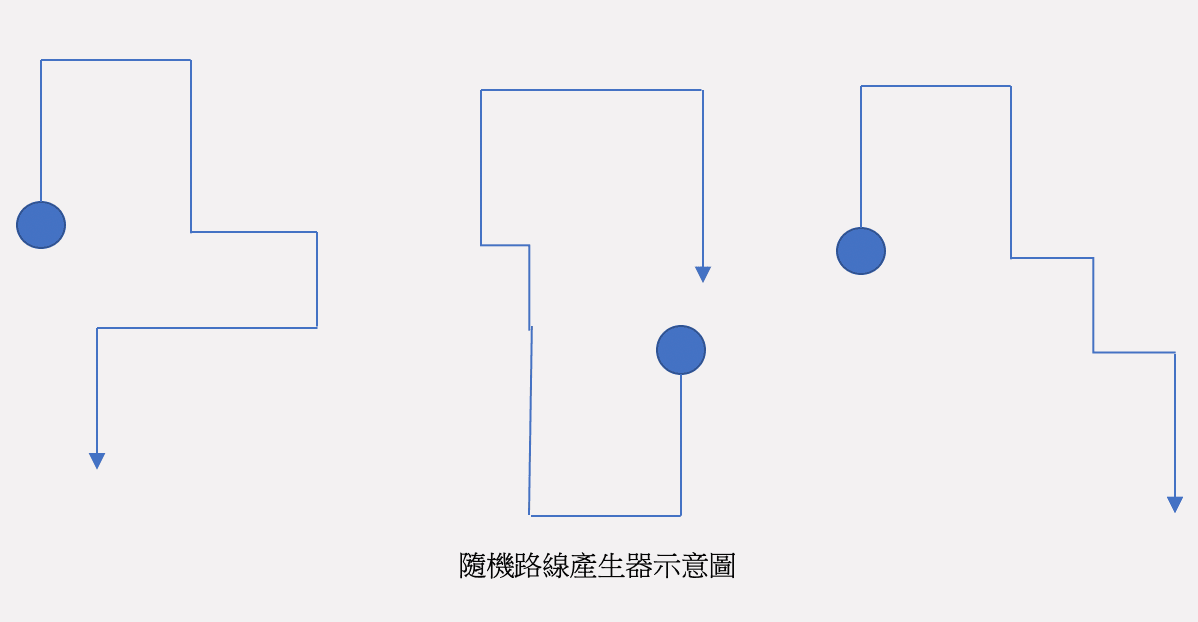
The participant would then travel through the route while trying to memorize the directions and path. After reaching the end of the maze, the system guided the participant back toward the original starting point.
During the return trip, participants were asked to predict the next movement direction:
The system automatically recorded all responses for later analysis under different experimental conditions.

Since the purpose of this experiment was to find ways to improve route memory, we hypothesized that the decline in spatial navigation ability among Alzheimer’s patients is related to memory deterioration.
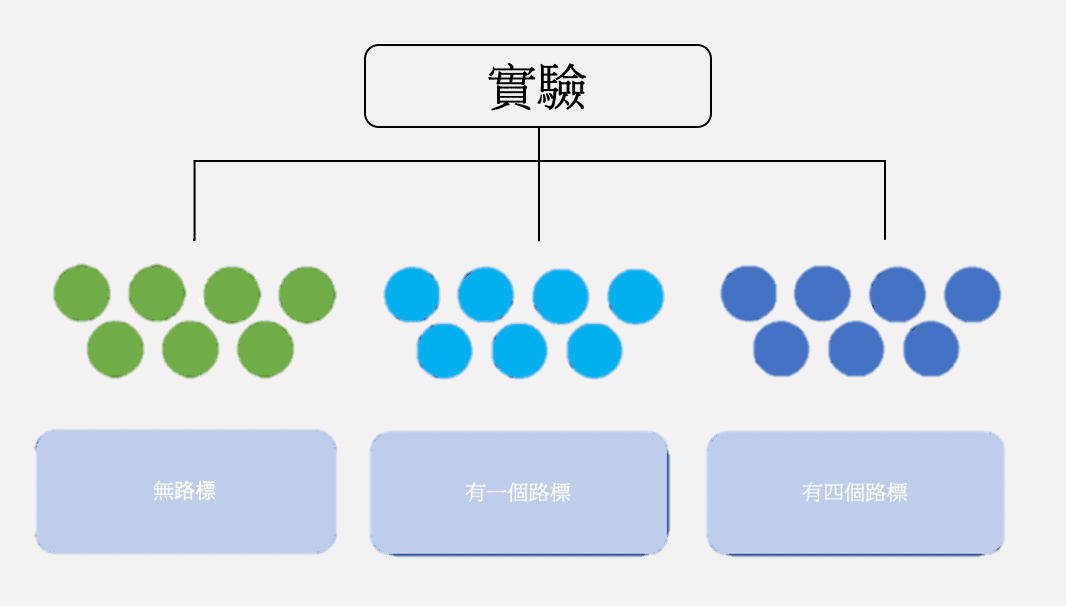
To investigate this, we designed three different environmental conditions to examine how people memorize paths under different visual cues.
The three conditions were:
As shown below:

The experiment was conducted 21 times in total. Each maze contained six turns, and each session randomly selected one of the three environmental variations.
During the experiment, we discovered that participants generally relied on two different memory strategies:
Participants tried to memorize the route by repeating verbal patterns or mnemonics internally.
Participants mentally visualized the maze from a bird’s-eye view and remembered the overall path structure.
To further strengthen the effect of landmarks on memory performance, participants were additionally asked to recite verbal patterns during later tests. This was done to reduce the possibility that verbal-memory participants would rely too heavily on memorization techniques instead of environmental cues.

The results showed that:
Using a single landmark produced the most significant improvement in directional memory.
This was followed by:
One possible explanation is that a single landmark not only informed participants that a turn was approaching, but also provided a stronger sense of relative orientation.
In contrast, four landmarks mainly served as simple indicators that a turn was nearby, reducing the uniqueness and effectiveness of each individual landmark.

This article documents an experimental prototype built to study how people form and use a sense of direction. The project uses Unity to create a controlled interactive environment where navigation behavior can be observed and recorded.
It is for readers who want to understand the implementation, design tradeoffs, and learning context behind The Cognitive Psychology Behind Sense of Direction.