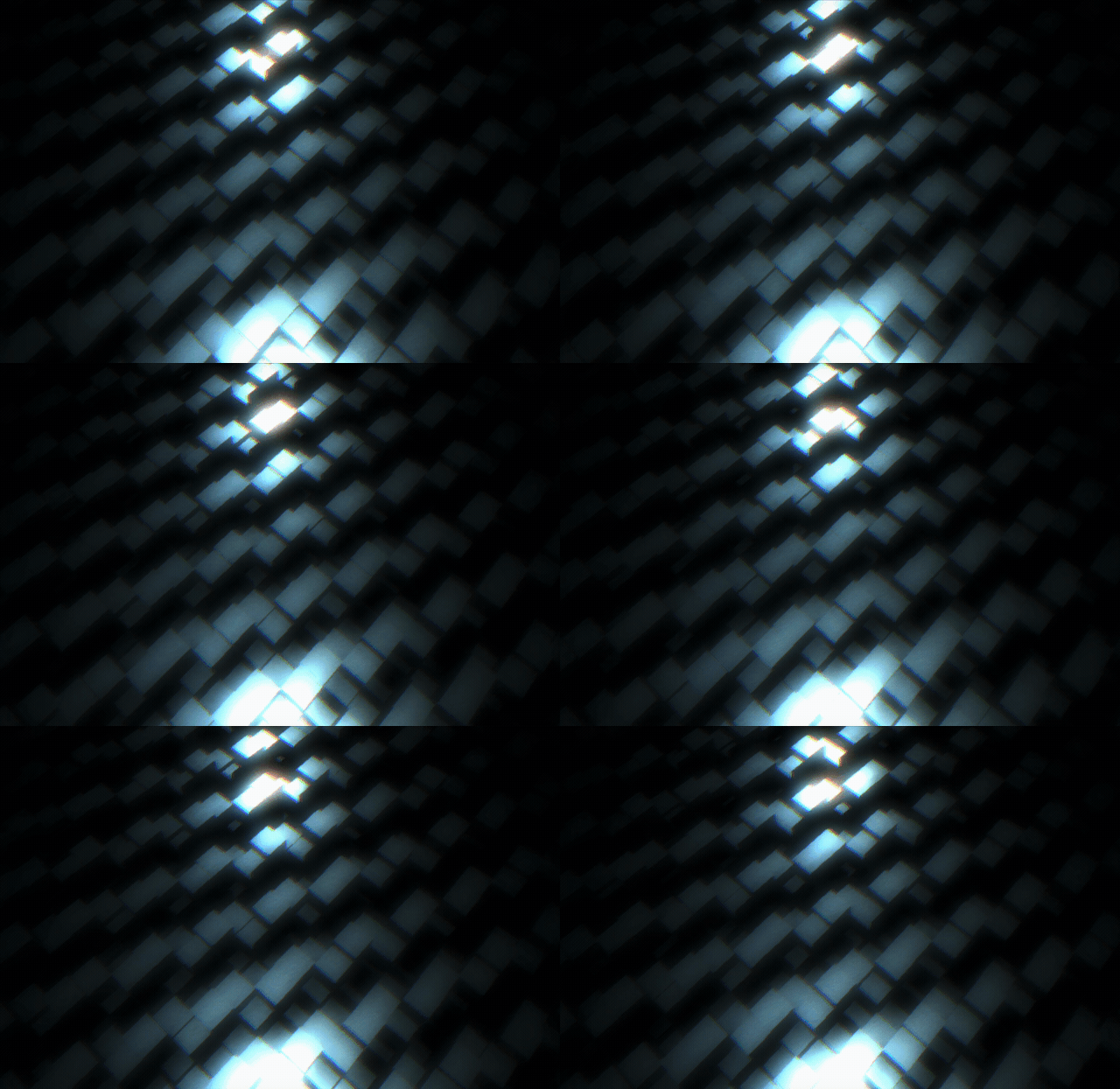
Generative Art: Cube Wave: Cube Wave is a small generative art experiment built with Babylon.js. The goal is to create a visual rhythm from many simple cube elements rather than relying on a single complex model.
Cube Wave is a small generative art experiment built with Babylon.js. The goal is to create a visual rhythm from many simple cube elements rather than relying on a single complex model.
The effect comes from repetition, timing, and transformation. Each cube can move, scale, or rotate according to a mathematical pattern, and the whole field becomes a wave-like visual system.
This kind of experiment is useful for learning real-time graphics because it connects code directly to perception. Small changes in frequency, phase, color, or camera position can change the feeling of the entire scene.
The project is also a good example of why creative coding matters. It creates a space where technical parameters become visual language.
Before publishing, I would add a short GIF, explain the core animation formula, and include the parameters that are easiest to modify.
The following source media, links, code, and MDX components are kept as technical references.
Cube Wave is a small generative art experiment built with Babylon.js. The goal is to create a visual rhythm from many simple cube elements rather than relying on a single complex model.
It is for readers who want to understand the implementation, design tradeoffs, and learning context behind Generative Art: Cube Wave.