Learning Quaternions While Waiting for Instant Noodles: Quaternions are often intimidating because they look abstract, but in 3D graphics they solve a very practical problem: representing rotation safely and smoothly.
Quaternions are often intimidating because they look abstract, but in 3D graphics they solve a very practical problem: representing rotation safely and smoothly.
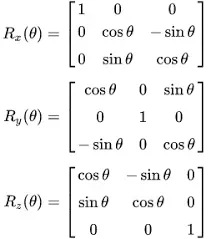
If Euler angles are like describing rotation one axis at a time, quaternions describe orientation in a way that avoids many of the problems caused by axis order and gimbal lock.
You do not need to understand every mathematical detail before using them. The first practical step is learning when to use quaternion rotation, how to convert from Euler angles, and how to interpolate between orientations.
In game engines and 3D frameworks, quaternions are especially useful for camera movement, object rotation, animation blending, and smooth turning.
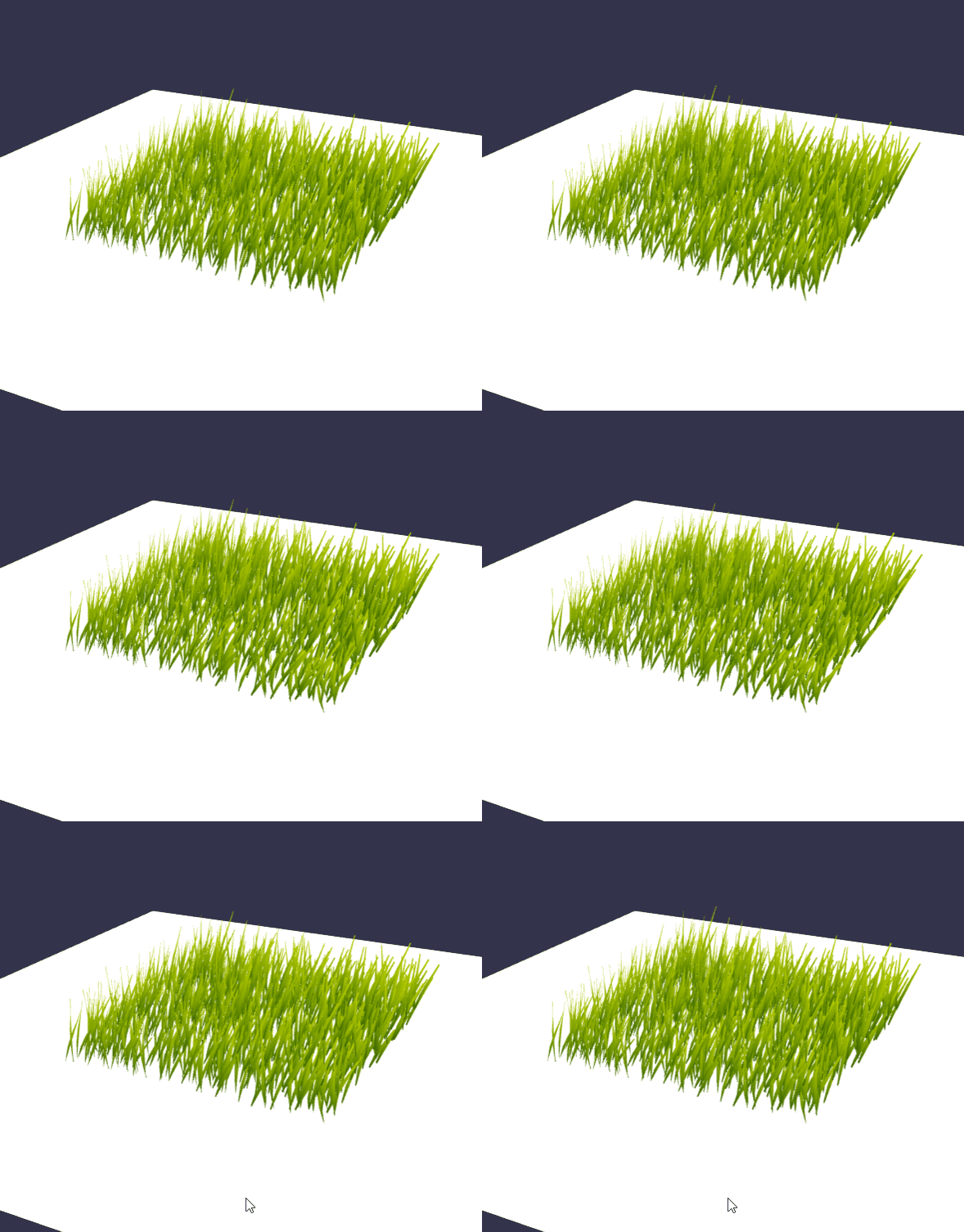
This draft is suitable for publication after adding small visual examples showing the difference between Euler rotation and quaternion interpolation.
The following source media, links, code, and MDX components are kept as technical references.
q = [s,v]
q = [s + xi + yj + zk]
q = [x, y, z, w]
p1 = q P0 q^-1
//known info : angle and axis
half_angle = angle/2
q.x = axis.x * sin(half_angle)
q.y = axis.y * sin(half_angle)
q.z = axis.z * sin(half_angle)
q.w = cos(half_angle);
q.x = position.x
q.y = position.y
q.z = position.z
q.w = 0
q = [x, y, z, w]
norm = |q| = sqrt(q.x^2 + q.y^2 + q.z^2 + q.w^2)
q^-1 = [-x, -y, -z, w]/ norm
q^-1 = [-x/norm, -y/norm, -z/norm, w/norm]
q^-1 = q* = [-x, -y, -z, w]
q = q1 * q2
q1 * q2 != q2 * q1
q.x = (q1.w * q2.x) + (q1.x * q2.w) + (q1.y * q2.z) - (q1.z * q2.y)
q.y = (q1.w * q2.y) - (q1.x * q2.z) + (q1.y * q2.w) + (q1.z * q2.x)
q.z = (q1.w * q2.z) + (q1.x * q2.y) - (q1.y * q2.x) + (q1.z * q2.w)
q.w = (q1.w * q2.w) - (q1.x * q2.x) - (q1.y * q2.y) - (q1.z * q2.z)
i^2 = j^2 = k^2 = -1
ij = -ji = k
jk = -kj = i
ki = -ik = j
Quaternions are often intimidating because they look abstract, but in 3D graphics they solve a very practical problem: representing rotation safely and smoothly.
It is for readers who want to understand the implementation, design tradeoffs, and learning context behind Learning Quaternions While Waiting for Instant Noodles.