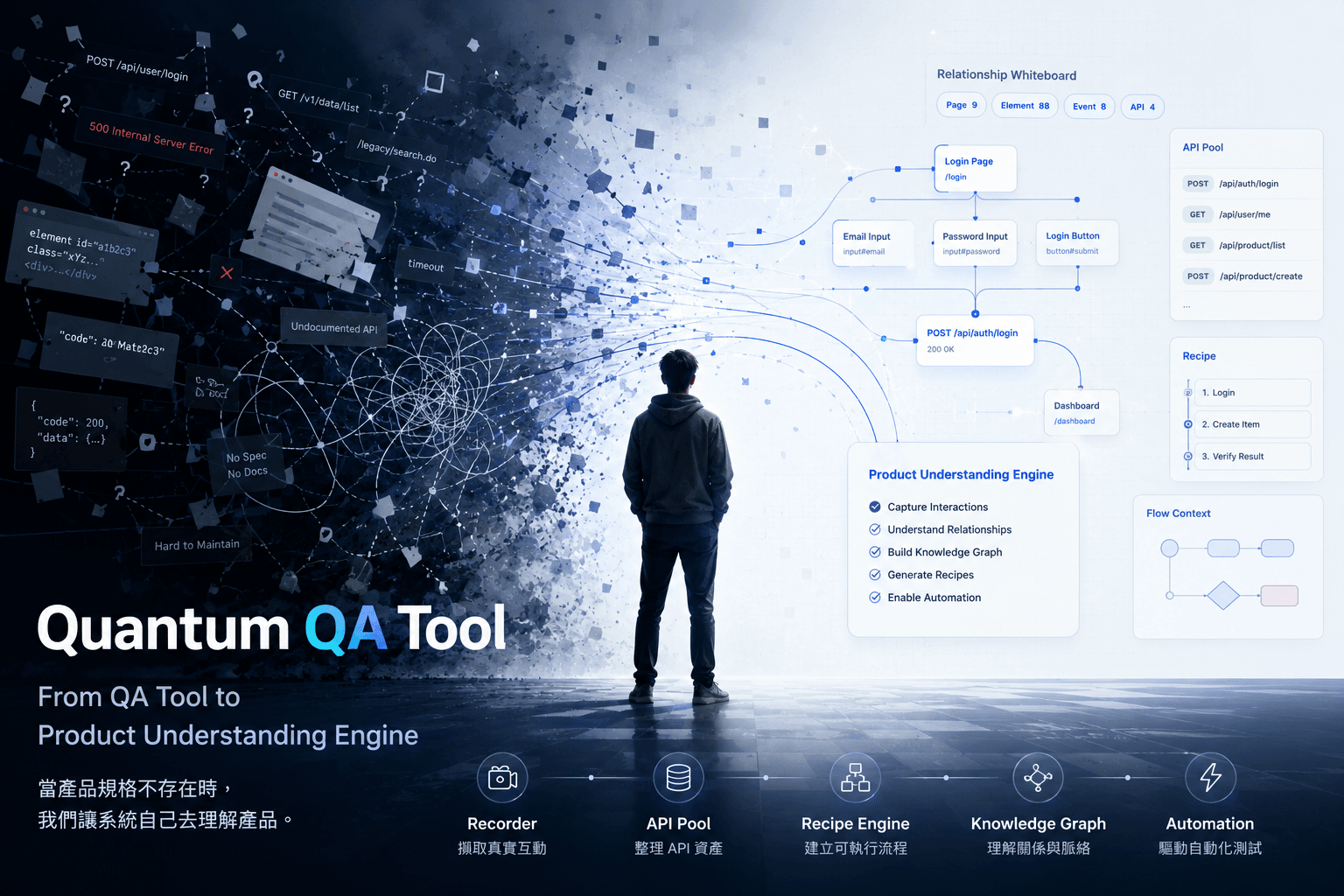
The Deadliest Technical Debt Is Not Bad Code: The most dangerous technical debt in a company is not always messy code. Messy code can be refactored when the team understands what the system is supposed to do. The deeper risk appears when no one can explain how the product actual…
The most dangerous technical debt in a company is not always messy code. Messy code can be refactored when the team understands what the system is supposed to do. The deeper risk appears when no one can explain how the product actually works.
When product specifications disappear, every change becomes archaeology. Engineers read code to guess business rules. Product managers ask around to reconstruct decisions. Support teams depend on memory instead of documentation.
This kind of debt compounds silently. The system may still run, but every new feature, bug fix, and onboarding process becomes slower because the organization has lost its shared model of the product.
My experiment was to make the system help explain itself. By combining documentation, structured product knowledge, and AI-assisted analysis, the goal is to create a workflow where the product model can be recovered, queried, and maintained.
The point is not to replace product thinking with AI. The point is to reduce the cost of understanding existing systems, so teams can make better decisions before changing them.
This article is suitable for publication after reviewing the examples and adding concrete before-and-after workflow screenshots.
The following source media, links, code, and MDX components are kept as technical references.


The most dangerous technical debt in a company is not always messy code. Messy code can be refactored when the team understands what the system is supposed to do. The deeper risk appears when no one can explain how the product actually wor…
It is for readers who want to understand the implementation, design tradeoffs, and learning context behind The Deadliest Technical Debt Is Not Bad Code.